Courtney Cruickshank – Page 2 – Derm In-Review

September 2024 Case Study

By 2024 Case Studies

September 2024 Case Study

Authors: Nidhi Shah, MD1 and Karl Saardi, MD1

  1. Department of Dermatology, George Washington University School of Medicine and Health Sciences

Patient History

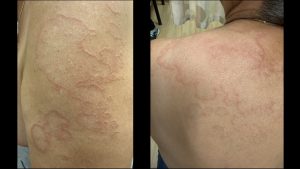
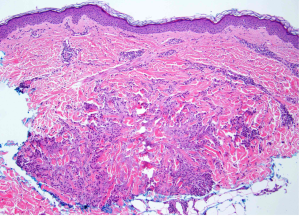
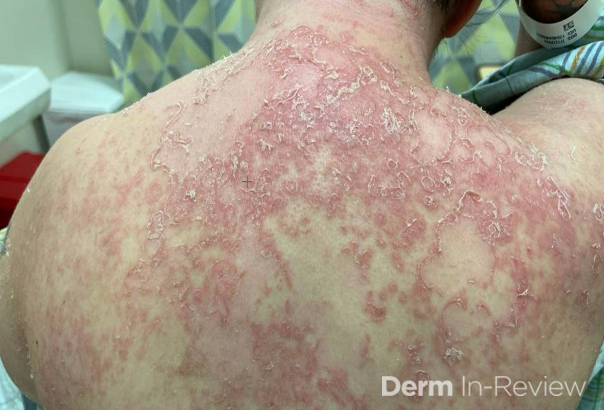
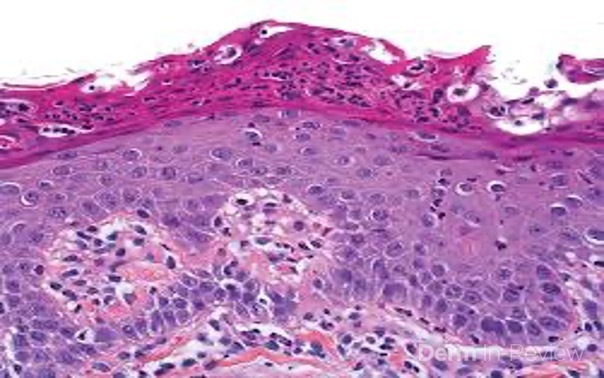
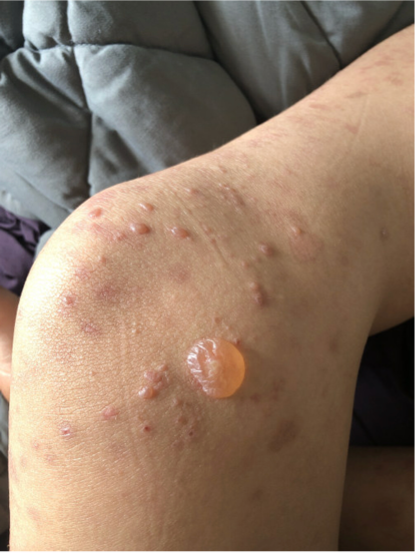
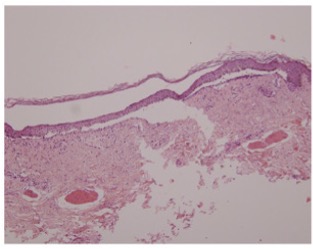
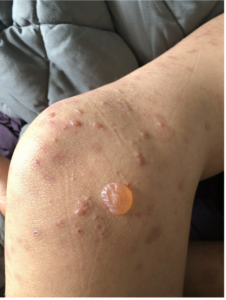
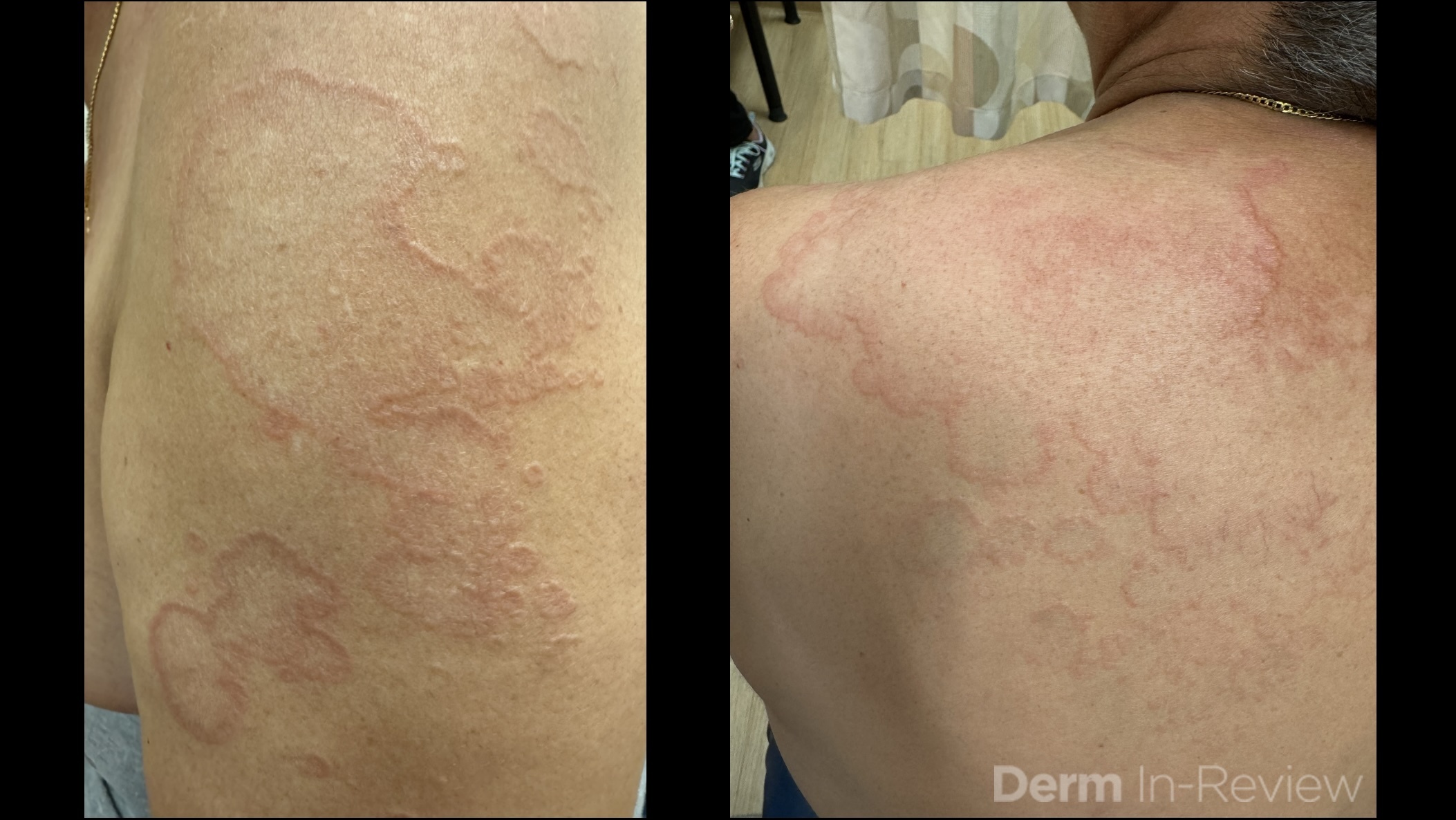
A 27-year-old male with no past medical history presented with a 1-year history of recurrent blisters throughout his body. Figure 1 demonstrates physical examination findings; there was no involvement of the oral or ocular mucosa. A punch biopsy for H&E was performed (Figure 2), and direct immunofluorescence (DIF) on salt-split skin demonstrated dermal staining.

Based on the clinical presentation and biopsy findings, what is the target for the circulating and tissue-bound autoantibodies?

A. LAD-1
B. Collagen VII
C. Laminin 332
D. BPAG2
E. Transglutaminase


Correct Answer: B

Explanation/Literature Review
Given the formation of tense bullae and vesicles in a young adult with biopsy findings demonstrating subepidermal cleavage with sparse inflammatory infiltrate and salt-split skin revealing staining on the dermal side, the patient was diagnosed with Epidermolysis Bullosa Acquisita (EBA), a very rare autoimmune blistering condition. The condition can be acquired at any age, with the median age of 50 years.1 EBA is characterized by development of autoantibodies against collagen VII, which is a major component of anchoring fibrils in the hemidesmosomes found in the sub-lamina densa of the skin and mucous membranes.1,2 On histology, there is subepidermal cleavage with or without inflammatory infiltrate based on the subtype of EBA. Further immunofluorescence studies demonstrate linear deposition of IgG and C3 at the basement membrane zone, with a u-serrated pattern and fluorescence only on the dermal side.1,2 Salt split skin DIF is a challenging technique requiring an experienced immunodermatology lab, in which patient’s skin is preserved in IF media, treated with IM NaCl, and then processed for DIF. This technique can be especially helpful in diseases where IIF is negative, and ELISA assays are not available.3 Traditionally, immunoelectron microscopy is considered the “gold standard” for diagnosing EBA.

LAD-1 (choice A) and LABD97 are the targets for linear IgA bullous dermatosis (LABD) which generally affects elderly adults and preschool-aged children and has histopathology findings of IgA +/- C3 deposition along basement membrane with epidermal staining on salt-split skin.4 Laminin 332 (choice C) is the target for anti-epiligrin mucous membrane pemphigoid (MMP) which on salt-split skin also demonstrates dermal deposition of IgG, similar to EBA, however, the condition is classically seen in elderly patients and the lack of mucosal involvement makes the diagnosis less likely.5,6 In bullous pemphigoid the targets include BPAG1 and BPAG2 (choice D), and clinically the presentation can be similar to the inflammatory subtype of EBA, however, on histology there would linear C3 and IgG deposition along the basement membrane in an “n-serrated” pattern with mostly epidermal staining on salt-split skin.7 Epidermal transglutaminase (choice E) is the target for dermatitis herpetiformis (DH), an autoimmune disease which always occurs in conjunction with celiac disease. IIF in DH is negative, and on DIF DH is differentiated from LABD by granular vs. linear IgA deposition at the basement membrane.8

Given the rarity of the condition and lack of randomized controlled trials, treatment is challenging and is based on case reports and findings from other autoimmune blistering conditions. First line options include systemic corticosteroids, IVIG, and immunomodulators including colchicine and dapsone, with immunosuppressants such as mycophenolate mofetil, azathioprine, and cyclosporine reserved as second line.1,9 Often, EBA is resistant to these therapies and recent evidence supports the use of rituximab.1,9

References

  1. Kridin K, Kneiber D, Kowalski EH, Valdebran M, Amber KT. Epidermolysis bullosa acquisita: A comprehensive review. Autoimmun Rev. 2019;18(8):786-795. doi:10.1016/j.autrev.2019.06.007
  2. Caux F. Diagnosis and Clinical Features of Epidermolysis Bullosa Acquisita. Dermatol Clin. 2011;29(3):485-491. doi:10.1016/j.det.2011.03.017
  3. Bolognia J, Schaffer JV, Cerroni L, eds. Dermatology. Fifth edition. Elsevier; 2025.
  4. Hull C, Zone J. Dermatology. In: Bolognia J SJCL, ed. Dermatology. Vol 31. e1 ed.; 2018:457-537.
  5. Shi L, Li X, Qian H. Anti-Laminin 332-Type Mucous Membrane Pemphigoid. Biomolecules. 2022;12(10):1461. doi:10.3390/biom12101461
  6. Carey B, Setterfield J. Mucous membrane pemphigoid and oral blistering diseases. Clin Exp Dermatol. 2019;44(7):732-739. doi:10.1111/ced.13996
  7. Miyamoto D, Santi CG, Aoki V, Maruta CW. Bullous pemphigoid. An Bras Dermatol. 2019;94(2):133-146. doi:10.1590/abd1806-4841.20199007
  8. Witte M, Zillikens D, Schmidt E. Diagnosis of Autoimmune Blistering Diseases. Front Med (Lausanne). 2018;5:296. Published 2018 Nov 2. doi:10.3389/fmed.2018.00296
  9. Miyamoto D, Gordilho JO, Santi CG, Porro AM. Epidermolysis bullosa acquisita. An Bras Dermatol. 2022;97(4):409-423. doi:10.1016/j.abd.2021.09.010

February 2025 Case Study

By 2025 Case Studies

February 2025 Case Study

Author: Olive Osuoji MD1
1Department of Dermatology, The George Washington University School of Medicine and Health Sciences

Patient History
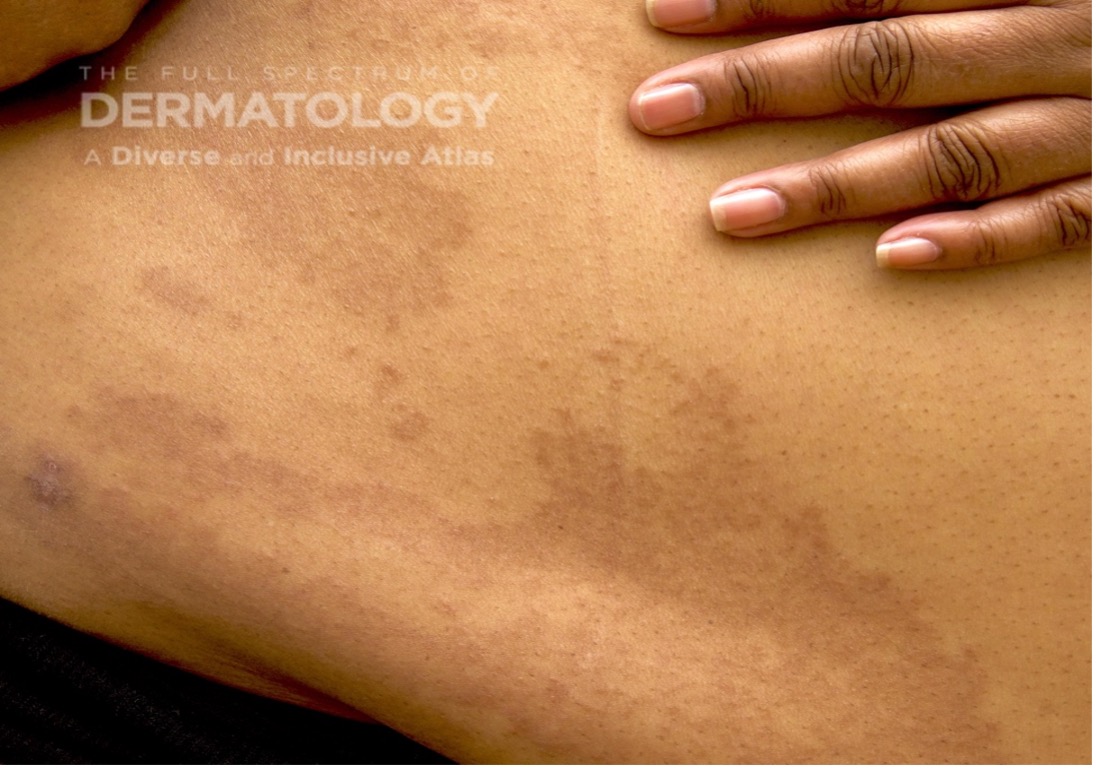
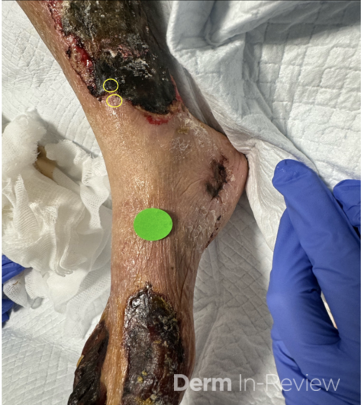
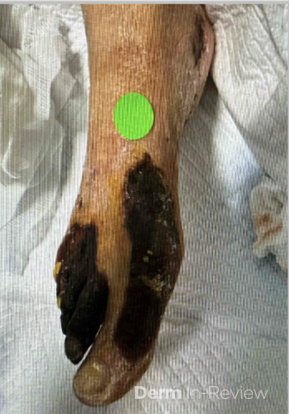
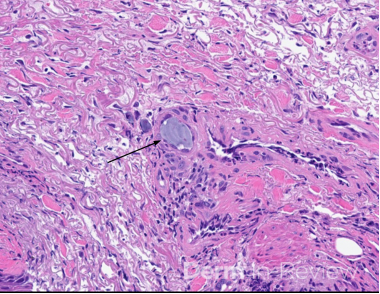
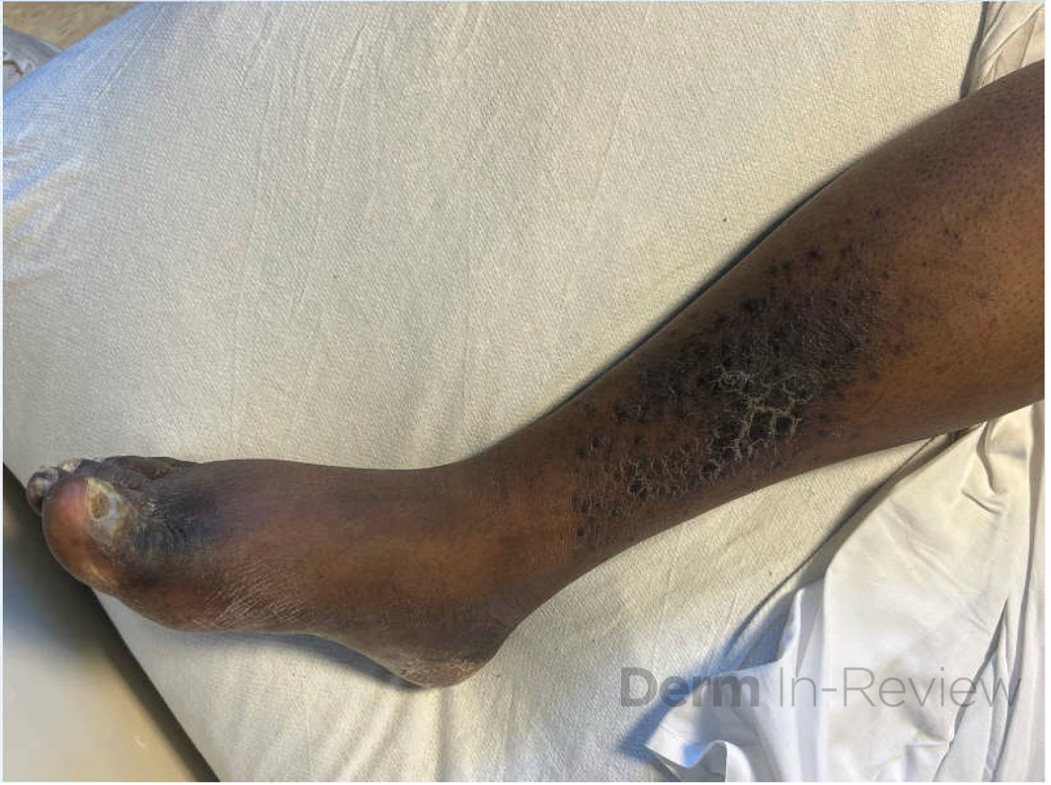
A 72-year-old male female with a past medical history of hypertension, end stage renal disease s/p renal transplant, type II diabetes mellitus, peripheral arterial disease, and atrial fibrillation was admitted to the hospital with right lower extremity (RLE) pain at rest and non-healing wounds. The patient had been admitted to the hospital 2 weeks prior for RLE angiogram with angioplasty. On examination, the patient had large well-defined necrotic ulcers with surrounding erythema on the right medial leg, right heel, and dorsal foot (Figure 1) and circumferential necrosis of the second through fifth right digits (Figure 2). Bilateral lower extremity dopplers showed triphasic signals. A punch biopsy was obtained from the periphery of the ulcer and H&E staining was performed (Figure 3). Laboratory findings were noncontributory.

Based on the clinical presentation and biopsy findings, which additional stain would be most useful to confirm the etiology of the underlying disease process?

A. Periodic acid-Schiff with diastase (PAS-D)
B. Colloidal iron
C. Von Kossa
D. Trichrome
E. Methenamine Silver


Correct Answer: B

Explanation/Literature Review
The patient presented clinically with retiform purpura and necrotic right lower extremity ulcerations two weeks following an angiogram with angioplasty. H&E stain of the punch biopsy specimen revealed amphophilic bilaminar material resembling hydrophilic polymer gel material within a dermal vessel, consistent with hydrophilic gel embolus. DIF revealed a non-diagnostic vascular fluorescence pattern, suggesting vascular damage without an immune complex-mediated vasculitis. These combined clinical and histopathological findings led to the diagnosis of cutaneous hydrophilic polymer emboli (HPE).

Cutaneous HPE is a rare iatrogenic occlusive vasculopathy that occurs after the use of polymer-coated intravascular devices. These devices – vascular catheters, delivery sheaths, coils, guidewires, grafts, and implants – are often coated with hydrophilic polymers to reduce friction between devices and vessel walls during endovascular procedures.1-4 Despite its utility, the polymer gel coating can separate from the metallic surface of the device and embolize, causing vascular occlusion and ischemic damage. Fewer than 25 cases of HPE have been documented in the literature, but with the growing use of percutaneous endovascular procedures, recognition of HPE has increased.5

HPE can lodge in small dermal vessels, appearing clinically as erythema with pruritus, nonpalpable petechiae and purpura, livedo reticularis/racemosa, retiform purpura, acute and chronic ulcerations, hyperkeratotic and lichenified nodules, and hemorrhagic panniculitis. These lesions usually appear within 24 hours to 2 weeks of the procedure, though some cases may manifest months or even years later. Systemic complications of HPE can be severe and include pulmonary infarction, myocardial infarction, stroke, gangrene, and potentially death.1, 6

When evaluating retiform purpura and necrotic ulcers on the lower extremities, etiologies of vascular compromise should be considered. The differential diagnosis includes calciphylaxis, vasculitides (small/medium vessel, ANCA-associated, drug-induced), cryoglobulinemia, and thrombotic/thromboembolic diseases such as cholesterol emboli, antiphospholipid syndrome, DIC, TTP, septic emboli, and medication-induced thrombosis (e.g., heparin-induced thrombocytopenia).7-8

The gold standard diagnosis of HPE requires a combination of clinical findings and histopathological evidence of non-refractile, non-polarizable basophilic, amorphous material occluding mid-dermal vessels. Colloidal iron staining for acid mucopolysaccharides can be used to identify the polymer gel in HPE, but is not necessary. Colloidal iron staining can be combined with hyaluronidase digestion to differentiate between hyaluronic acid and other mucosubstances. An absence of tissue neutrophilia helps differentiate HPE from cholesterol emboli.1, 2, 6, 9

Management of cutaneous HPE prioritizes early detection to avoid unnecessary amputation. Most cutaneous lesions of HPE spontaneously resolve without treatment as the polymer material biodegrades in vivo over weeks to months, however, supportive treatment for symptoms and secondary infections may be warranted. Evidence for the role of wound care, trials of topical or oral corticosteroids, surgical resection, and antiplatelet agents is only supported by case reports.1, 6, 8

Incorrect Options 10-12

  • Periodic acid-Schiff (PAS) staining with diastase – glycogen, neutral mucopolysaccharide, and fungal stain; can be used to assist in identifying fungal organisms and inflammatory dermatoses
  • Von Kossa – calcium stain; can be used to identify calciphylaxis
  • Masson Trichrome – collagen stain; can be used to identify connective tissue abnormalities, perforating disorders, fibrosis, ischemic damage
  • Methenamine Silver – fungal stain; can be used to identify angioinvasive fungal organisms


References

  1. Chan KPR, Lee JSS, Lim JHL. Cutaneous Hydrophilic Polymer Embolism: An Important and Overlooked Clinical Entity. Am J Dermatopathol. 2024;46(7):452-454.
  2. Miyaoka M, Hatanaka K, Uekusa T, Nakamura N. Clinicopathological features of hydrophilic polymer emboli in Japanese autopsy cases. APMIS. 2018;126(11):838-841.
  3. Mehta RI, Mehta RI, Choi JM, Mukherjee A, Castellani RJ. Hydrophilic polymer embolism and associated vasculopathy of the lung: prevalence in a retrospective autopsy study. Hum Pathol. 2015;46(2):191-201.
  4. Barnwell SL, D’Agostino AN, Shapiro SL, Nesbit GM, Kellogg JX. Foreign bodies in small arteries after use of an infusion microcatheter. AJNR Am J Neuroradiol. 1997;18(10):1886-1889.
  5. Baudo M, Magrini E, Pernot M, et al. Hydrophilic polymer embolization after TAVI. J Cardiol. 2024;84(2):141-142.
  6. Sabzevari N, Schapiro BL, Stewart B. Necrotic leg ulcers secondary to hydrophilic polymer gel emboli. J Vasc Surg Cases Innov Tech. 2019;5(3):310-313. Published 2019 Jun 29.
  7. Georgesen C, Fox LP, Harp J. Retiform purpura: A diagnostic approach. J Am Acad Dermatol. 2020;82(4):783-796.
  8. Shefler A, Blaszak SC, Shea CR, Chadha AA. A Rare Case of Hydrophilic Polymer Embolization After Transcatheter Aortic Valve Replacement. Am J Dermatopathol. 2023;45(6):411-413.
  9. Thompson AK, Peters MS, El-Azhary RA, et al. Cutaneous microemboli from hydrophilic polymer after endovascular procedures. J Am Acad Dermatol. 2015;73(4):666-671.
  10. Elston DM, Ferringer T, Ko C, Peckham S, High WA, DiCaudo DJ. Dermatopathology. Third edition. Elsevier; 2018.
  11. Van De Vlekkert D, Machado E, d’Azzo A. Analysis of Generalized Fibrosis in Mouse Tissue Sections with Masson’s Trichrome Staining. Bio Protoc. 2020;10(10):e3629. Published 2020 May 20.
  12. Shalin SC, Ferringer T, Cassarino DS. PAS and GMS utility in dermatopathology: Review of the current medical literature. J Cutan Pathol. 2020;47(11):1096-1102.

January 2025 Case Study

By 2025 Case Studies

January 2025 Case Study

Author: Nathaniel Lampley, MD

Patient History
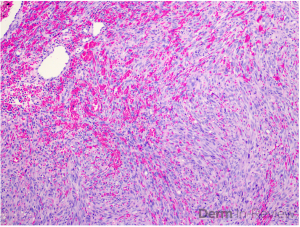
A 61-year-old male presents to your clinic with a rash on his right shin. His past medical history is significant for poorly controlled HIV. His most recent CD4+ T-cell count, and viral load were 18 and 3.3 million, respectively. The patient tells you that the rash started a few months ago as small spots that seemed to get larger and spread across his shin. He has never seen a physician for the rash and has tried no previous treatments. Examination of the right lower extremity is shown in Figure 1. A punch biopsy is performed, and histopathology is shown in Figure 2.

Which of the following immunohistochemical stains would assist in achieving a definitive diagnosis?

A) CD31
B) HHV-8
C) CK20
D) Factor XIIIa
E) GLUT1


Correct Answer: B

B) The Human herpesvirus (HHV)-8 viral stain is used to confirm the diagnosis of Kaposi’s sarcoma (KS) which is the etiology of this patient’s rash. There are 4 main types of KS: Classic, African endemic, Iatrogenic and AIDS-related.3 The patient’s history of uncontrolled HIV combined with the clinical and histopathological features presented in the question vignette should yield suspicion for KS. Histopathology of KS demonstrates an interstitial spindle cell proliferation, vascular wrapping, thin vascular spaces, extravasated RBCs, hemosiderin, and increased plasma cells.1 Application of the HHV-8 stain is especially important in the diagnosis of KS as angiosarcoma and dermatofibroma can mimic KS on histopathology.

Explanation of Incorrect Answers:

A) The CD31 stain is a marker of vascular endothelial cells and is helpful in confirming the vascular origin of tumors.2 CD31 is positive in angiosarcoma. Histopathology of angiosarcoma demonstrates poorly formed vessels filled lined by large, atypical, hyperchromatic endothelial cells that protruded into the lumen. The vascular spaces are poorly formed and leaky yielding the bruise-like clinical appearance.1

C) The CK20 stain marks Merkel cell carcinoma in the perinuclear dot pattern. It is also helpful in determining the origin of metastatic carcinomas of unknown origin as it generally correlates with adenocarcinomas that develop in organs below the diaphragm.2 Histopathology of Merkel cell carcinoma demonstrates small blue cells with scant cytoplasm and tightly packed nuclei. Nuclear molding, apoptotic cells and mitoses can also be visualized.2

D) The Factor XIIIa stain highlights dermal dendritic cells and is positive in dermatofibromas and negative in dermatofibrosarcoma protuberans (DFSP).2 Histopathology of dermatofibromas demonstrate a proliferation of fibrohistiocytic cells, ringed lipidized siderophages, peripheral collagen trapping, and overlying platelike acanthosis. Another hallmark feature of dermatofibromas is their alternating areas of hypercellularity and hypocellularity.2

E) Glucose transporter 1 (GLUT1) is a protein that is expressed in endothelial cells that have a blood-tissue barrier function. The GLUT1 stain is positive in infantile hemangiomas, but negative in both rapidly-involuting congenital hemangiomas (RICH) and non-involuting congenital hemangiomas (NICH).2 Histopathology of infantile hemangiomas demonstrates nonencapsulated masses of dense cords of mitotically active endothelial cells and pericytes with prominent basement membranes.4

References

  1. Alikhan, Ali, and Thomas L. H Hocker. Review of Dermatology (p. 435). Elsevier, 2024.
  2. Elston, Dirk M., et al. Dermatopathology (p. 133, 145, 147, 1249, 1424). Elsevier, 2019.
  3. Friedman, Adam, editor, et al. Derm In-Review 2024 Study Guide (p. 310,385). SanovaWorks, 2023.
  4. Nakayama, Hiroko. “Clinical and Histological Studies of the Classification and the Natural Course of the Strawberry Mark.” The Journal of Dermatology, vol. 8, no. 4, Aug. 1981, pp. 277–291, doi:10.1111/j.1346-8138.1981.tb02546.x.