2026 Case Studies – Derm In-Review

February 2026 Case Study

By 2026 Case Studies

February 2026 Case Study

Caroline Clark, MD1

  1. Department of Dermatology, George Washington University School of Medicine and Health Sciences

Patient History
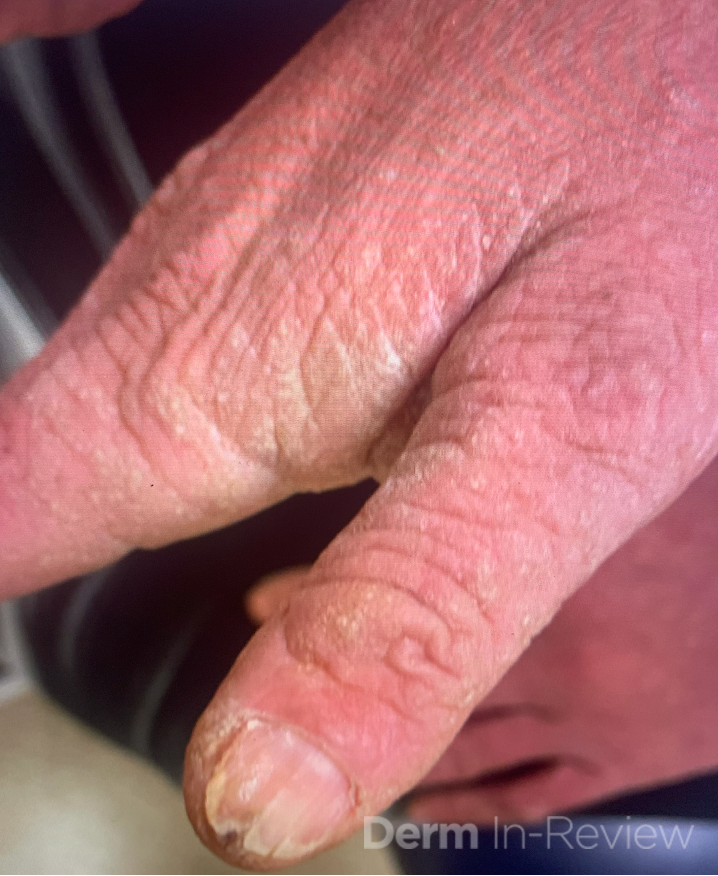
A 19-year-old woman presents to dermatology clinic with a 3-year history of a progressively worsening rash on her neck, chest and hands, and nail changes. The rash is mildly itchy, has a strong odor, and worsens during the summer months when she is sweating or spending time outdoors. She has tried over-the-counter acne treatments and moisturizers without improvement.

Her father reports having similar skin problems that began in his teenage years.

Laboratory studies including complete blood count, comprehensive metabolic panel, and thyroid function tests are within normal limits.
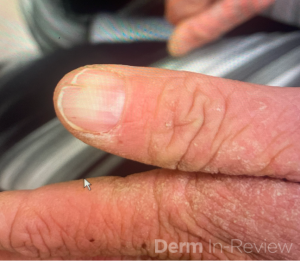
A gene mutation affecting which of the following processes is most likely responsible for this patient’s skin findings?

A) Keratinocyte proliferation and differentiation

B) Degradation of keratin through proteolytic enzymes 

C) Keratinocyte Adhesion

D) Endoplasmic Reticulum calcium transport

E) Golgi Apparatus calcium transport


Correct Answer: D

Explanation/Literature Review 

Darier disease is an autosomal dominant genodermatosis caused by mutations in the ATP2A2 gene, which encodes the sarco/endoplasmic reticulum (ER) calcium ATPase type 2 (SERCA2) pump (Answer choice D).  This genetic defect impairs intracellular calcium homeostasis, leading to desmosome breakdown, acantholysis, and abnormal keratinization.1

The disease typically manifests in the second decade of life with greasy, yellow-brown keratotic papules and plaques in a seborrheic distribution (face, chest, back) and flexural regions, often accompanied by a characteristic malodor.1,2  Nearly all patients develop nail abnormalities including red and white longitudinal streaks with V-shaped notches at the distal edges, and many have palmoplantar pits and oral mucosal papules.

Histologically, the hallmark features are suprabasilar acantholysis with corps ronds (enlarged keratinocytes with fragmented nuclei in the spinous layer) and corps grains (small oval cells in the stratum corneum).2

The disease follows a chronic relapsing course with exacerbations triggered by heat, humidity, UV radiation, mechanical trauma, and infections.1,3

Treatment remains largely symptomatic, with oral retinoids being most effective for extensive disease, though recent evidence suggests targeting the IL-23/IL-17 axis may provide benefit in therapy-resistant cases.1,4

Explanation of Incorrect Answers

Keratinocyte adhesion (Answer choice C) is impaired in Darier disease due to ER stress and abnormal desmosome/adherens junction formation, but this is a downstream consequence rather than the primary molecular defect. Abnormal keratinocyte proliferation and differentiation (Answer choice A) are seen in psoriasis, which affects the nails with pitting, onycholysis, and subungual hyperkeratosis. The nail findings seen in onychomycosis are a result of the dermatophyte’s degradation of keratin through proteolytic enzymes (Answer choice B). Lastly, Hailey-Hailey disease (benign familial pemphigus) is caused by a mutation in ATP2C1 encoding SPCA1, a secretory pathway Ca²⁺-ATPase located in the Golgi apparatus (Answer choice D).  Both Hailey-Hailey and Darier disease are calcium pump disorders with overlapping clinical features including acantholysis, however the keratotic papules and nail V-nicking are more characteristic of Darier disease. 

References

  1. Ettinger M, Kimeswenger S, Deli I, Traxler J, Altrichter S, Noack P, Wikstrom JD, Guenova E, Hoetzenecker W. Darier disease: Current insights and challenges in pathogenesis and management. J Eur Acad Dermatol Venereol. 2025 May;39(5):942-951. doi: 10.1111/jdv.20448. Epub 2024 Nov 28. PMID: 39606894; PMCID: PMC12023721.
  2. Engin B, Kutlubay Z, Erkan E, Tüzün Y. Darier disease: A fold (intertriginous) dermatosis. Clin Dermatol. 2015 Jul-Aug;33(4):448-51. doi: 10.1016/j.clindermatol.2015.04.009. Epub 2015 Apr 9. PMID: 26051059.
  3. Atzmony L, Zagairy F, Mawassi B, et al. Persistent Cutaneous Lesions of Darier Disease and Second-Hit Somatic Variants in ATP2A2 Gene. JAMA Dermatol. 2024;160(5):518–524. doi:10.1001/jamadermatol.2024.0152
  4. Ettinger M, Burner T, Sharma A, Chang YT, Lackner A, Prompsy P, Deli IM, Traxler J, Wahl G, Altrichter S, Langer R, Tsai YC, Varkhande SR, Schoeftner LC, Iselin C, Gratz IK, Kimeswenger S, Guenova E, Hoetzenecker W. Th17-associated cytokines IL-17 and IL-23 in inflamed skin of Darier disease patients as potential therapeutic targets. Nat Commun. 2023 Nov 17;14(1):7470. doi: 10.1038/s41467-023-43210-5. PMID: 37978298; PMCID: PMC10656568.
January 2026 Case Study

By 2026 Case Studies

January 2026 Case Study

Nathaniel Lampley, MD

Patient History 

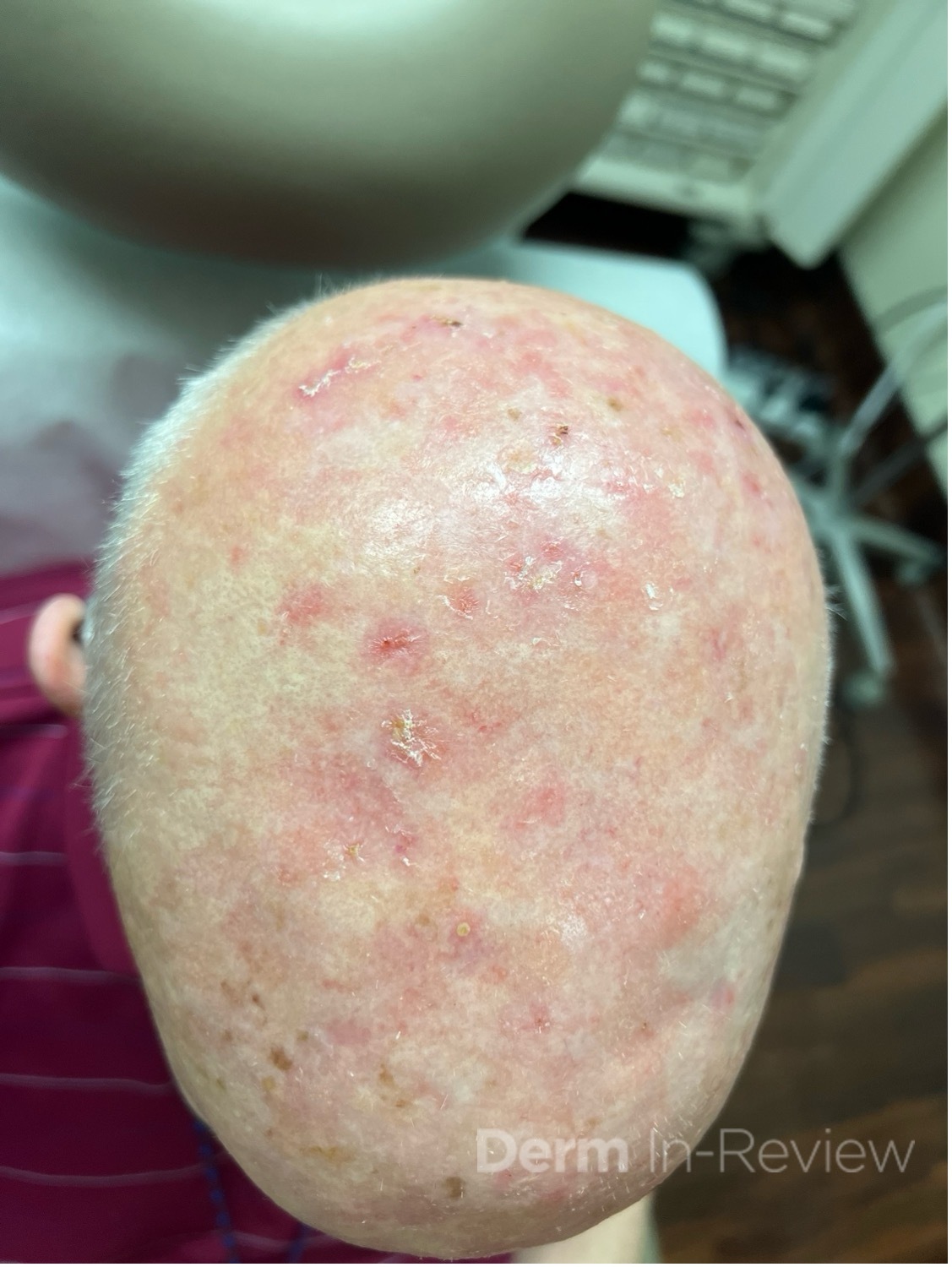
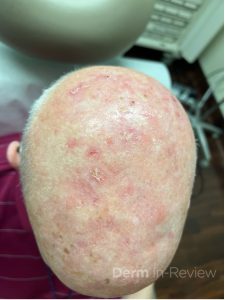
A 60-year-old male presents to your clinic for a skin cancer screening. He has no history of skin cancer or skin cancer treatments, but does admit to a heavy sun exposure history. You identify the pictured scalp lesions during your exam (Figure 1). Given the extent of scalp involvement, you prescribe a topical field therapy. A few days after beginning treatment, he develops rapidly progressive erythema, edema, erosions, and ulceration at the application sites, accompanied by fever, nausea, vomiting, and diarrhea.

Which of the following enzymes is the patient most likely deficient in?

A) Thymidylate synthase

B) Thiopurine methyltransferase

C) Dihydropyrimidine dehydrogenase

D) Inosine monophosphate dehydrogenase


Correct Answer: C

Explanation/Literature Review 

C) This patient presented with actinic keratoses (Figure 1) that were treated with topical 5-fluorouracil (5-FU). A deficiency in dihydropyrimidine dehydrogenase (DPD) can lead to impaired metabolism of 5-fluorouracil (5-FU). DPD is the rate-limiting enzyme responsible for the catabolism of over 80% of administered 5-FU. In patients with partial or complete DPD deficiency, even topical exposure can result in excessive local toxicity due to drug accumulation. 1-3

Reactions typically occur within the first several days of initiating topical therapy and can manifest as severe erosive dermatitis, ulceration, pain that is markedly more intense than the expected inflammatory response seen with standard 5-FU treatment, as well as systemic symptoms.

Recognition of this entity is important, as continued exposure can lead to severe cutaneous injury, and systemic 5-FU administration in patients with undiagnosed DPD deficiency may result in life-threatening toxicity. Management involves immediate cessation of 5-FU, supportive wound care, and avoidance of future fluoropyrimidine exposure. Genetic testing for DPD mutations may be considered.4

Explanation of Incorrect Answers

A) Thymidylate synthase is the intracellular target of 5-fluorouracil, which inhibits DNA synthesis by preventing the conversion of deoxyuridylate to thymidylate. While inhibition of this enzyme mediates the therapeutic effect of 5-FU, deficiency or alteration of thymidylate synthase does not explain excessive toxicity due to impaired drug metabolism.5

B) Thiopurine methyltransferase (TPMT) is involved in the metabolism of thiopurine medications, including azathioprine, 6-mercaptopurine, and 6-thioguanine. Deficiency in TPMT can lead to life-threatening myelosuppression with the administration of these agents, but it has no role in fluoropyrimidine metabolism.6

D) Inosine monophosphate dehydrogenase (IMPDH) is a key enzyme in de novo guanine nucleotide synthesis and is inhibited by medications such as mycophenolate mofetil. Deficiency or inhibition of this enzyme does not affect 5-FU metabolism and is unrelated to fluoropyrimidine toxicity.7

References

  1. Amstutz U, Henricks LM, Offer SM, Barbarino J, Schellens JH, Swen JJ, Klein TE, McLeod HL, Caudle KE, Diasio RB, Schwab M. Clinical Pharmacogenetics Implementation Consortium (CPIC) guideline for dihydropyrimidine dehydrogenase genotype and fluoropyrimidine dosing: 2017 update. Clinical Pharmacology & Therapeutics. 2018 Feb;103(2):210-6.
  2. Ezzeldin H, Diasio R. Dihydropyrimidine dehydrogenase deficiency, a pharmacogenetic syndrome associated with potentially life-threatening toxicity following 5-fluorouracil administration. Clinical colorectal cancer. 2004 Sep 1;4(3):181-9.
  3. Henricks LM, Lunenburg CA, de Man FM, Meulendijks D, Frederix GW, Kienhuis E, Creemers GJ, Baars A, Dezentjé VO, Rosing H, Beijnen JH. DPYD genotype-guided dose individualization of fluoropyrimidine therapy: A prospective safety and cost-analysis on DPYD variants DPYD* 2A, c. 2846A> T, c. 1679T> G and c. 1236G> A. Annals of Oncology. 2018 Oct 1;29:viii150.
  4. Meulendijks D, Henricks LM, Sonke GS, Deenen MJ, Froehlich TK, Amstutz U, Largiadèr CR, Jennings BA, Marinaki AM, Sanderson JD, Kleibl Z. Clinical relevance of DPYD variants c. 1679T> G, c. 1236G> A/HapB3, and c. 1601G> A as predictors of severe fluoropyrimidine-associated toxicity: a systematic review and meta-analysis of individual patient data. The Lancet Oncology. 2015 Dec 1;16(16):1639-50.
  5. Longley DB, Harkin DP, Johnston PG. 5-fluorouracil: mechanisms of action and clinical strategies. Nature reviews cancer. 2003 May 1;3(5):330-8.
  6. Relling MV, Schwab M, WhirlCarrillo M, SuarezKurtz G, Pui CH, Stein CM, Moyer AM, Evans WE, Klein TE, AntillonKlussmann FG, Caudle KE. Clinical pharmacogenetics implementation consortium guideline for thiopurine dosing based on TPMT and NUDT 15 genotypes: 2018 update. Clinical Pharmacology & Therapeutics. 2019 May;105(5):1095-105.
  7. Allison AC, Eugui EM. Mycophenolate mofetil and its mechanisms of action. Immunopharmacology. 2000 May 1;47(2-3):85-118.